Description
The Internet of Things (IoT) is already a reality in many application domains, ranging from industrial settings to smart cities, from healthcare to logistics and transportation. In Italy, in 2024, the number of connected IoT devices has reached 155 million, approximately 2.6 objects per inhabitant. In the same year, the IoT market has increased by 9%, with respect to 2023, reaching an overall budget of 9.7 billion €. Most of the budget is concentrated on Smart Cars (17% of the overall budget in 2024), Smart Metering (16%), Smart Buildings (15%), Smart Cities (10%), Smart Factories (10%), Smart Homes (9%), Smart Logistics (9%), Smart Agriculture (6%), Smart Asset Management (4%). This trend is expected to increase more in the future, evolving towards the so-called Pervasive IoT.
The future Pervasive IoT will be an extremely complex environment. It will be characterized by a very large number of connected devices: it is expected that 40 billion devices will be connected by 2030. These IoT devices will be very heterogeneous in nature, ranging from simple wearable devices to high-end IoT devices, such as Unmanned Aerial Vehicles (UAVs). Also, they connect to the Internet through a variety of communication technologies. Depending on the specific application domain, more or less stringent Quality of Service (QoS) constraints will be required, in terms of latency, reliability and security. Artificial Intelligence (AI) services will be increasingly embodied in future IoT devices. However, some complex tasks will require to be executed at Edge and/or Cloud Computing platforms. Hence, intelligence will be embedded along the Cloud-to-Things Continuum.
The large number of connected devices, coupled with the QoS requirements, will ask for new computing paradigms. At the same time, new models, algorithms, and systems will be required for localization and tracking in complex scenarios with heterogeneous network technologies, based on integrated sensing-communication approaches. Finally, sustainability and environmental impact will be also very relevant aspects, due to the large number of devices and their impact, in terms of energy consumption, device management, and device disposal.
In this tutorial, we intend to introduce and discuss some of the new (computation and communication) paradigms required in the future Pervasive IoT, which are briefly described below. Specifically, for each topic considered, we will survey the solutions available in the literature. Open issues will also be emphasized.
Tutorial Description
Battery-less IoT and Intermittent Computing
Sustainability will play a very relevant role in the future Pervasive IoT era. Moving towards a future with hundreds of billions of IoT devices poses several challenges, mainly concerning (i) energy consumption, (ii) device management and disposal, and (iii) environmental impact. Although these challenges are not completely new, they are made more relevant by the increasing number of connected objects. Recently, battery-less solutions have been investigated to address the problem of energy consumption and environmental impact. Leveraging energy harvesting systems capable of scavenging energy from the external environment, battery-less solutions avoid the problem of recharging batteries and, in principle, allows an endless lifetime. On the other hand, energy may not be available at any time and, hence, an intermittent computing paradigm must be considered when taking a battery-less approach.
Device and Network Heterogeneity
The Pervasive IoT will be characterized by a very large number of heterogeneous devices connected through many different communication technologies. Recently, new wireless technologies are emerging to connect to a large number of IoT devices, involved in applications with different and dynamically changing QoS requirements. We will present some of these emerging technologies, such as 6G, WiFi7, and LiFi. Also, we will try to emphasize the pros and cons of different communication technologies, and their suitability to different application scenarios.
Cloud-to-Things Continuum (C2TC)
In the future IoT, more AI services will be embodied in IoT devices. However, in more complex applications, some tasks will require to be executed at Cloud and/Edge computing platforms. Hence, intelligence will be distributed along the C2TC. The challenge will be to manage computing and networking resources in C2TC in a scalable and efficient manner, especially when critical applications (i.e., applications Infrastructure continuum represents our environment, where we can move from edge computing (by exploiting remote resources) to the Cloud, going through Fog resources to set up the entire framework for services deployment.
Joint Allocation of Computing/Network Resources in the C2TC
Strategies for resource allocation should be aimed at optimizing the available computing/network resources in C2TC, while satisfying the QoS requirements of applications. Applications with (very) different QoS requirements typically coexist on the same IoT system. Hence, resource allocation strategies must be flexible. When dealing with critical applications with very stringent QoS requirements (e.g., industrial or healthcare applications), novel probabilistic approaches may be required.
Dynamic Service Reconfiguration
Pervasive IoT systems are also characterized by a large dynamism. New applications can be deployed, while some old applications can be removed. Also, the QoS may change over time, depending on the external conditions. Hence, optimal strategies for joint computing/network allocation must be complemented with adaptive solutions that can dynamically change the resource allocation, while guaranteeing the QoS provision without discontinuities.
Microservices-based Applications in the C2TC
Modern Pervasive IoT applications are increasingly based on microservices, decomposing complex functionalities into loosely coupled components that can be dynamically placed across Edge, Fog, and Cloud nodes according to latency, reliability, and resource constraints. Energy consumption is also a key concern in microservices-based systems, as the numerous placement and orchestration decisions may rapidly increase the overall operational cost and impact the system's sustainability. Supporting microservices introduces new challenges in orchestration and fine grained resource allocation, requiring placement and orchestration policies that optimize resource utilization, limit energy consumption, and ensure QoS requirements.
Notice: A PDF copy of the presentation will be made available to attendees through the conference website.
Schedule
The following is a time schedule for the tutorial (total: 3 hours).
| Duration | Topic |
|---|---|
| 10 min | Introduction |
| 20 min | Batteryless IoT and Intermittent Computing |
| 60 min | Emerging Network Technologies for the Pervasive IoT (LiFi, WiFi7, B5G, …) |
| 15 min | Examples of Pervasive IoT Applications |
| 20 min | Cloud-to-Things Continuum (C2TC) |
| 10 min | Joint Allocation of Computing and Network Resources in the C2TC |
| 15 min | Optimal Resource Allocation in the C2TC |
| 15 min | Dynamic Reconfiguration |
| 15 min | Microservices-based Applications |
Instructors' Biographies
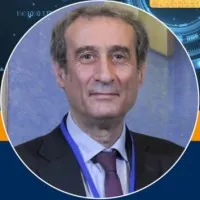
Giuseppe Anastasi is a Professor of Computer Engineering at the Department of Information Engineering (DII) of the University of Pisa, Italy. He is the Rector's Delegate for Digital Transition and Innovation and the Director Emeritus of the CrossLab for Digital Transformation. From 2016 to 2020 he was the Head of the DII.
His scientific interests include Internet of Things, Cloud/Fog/Edge Computing, Cyber-physical Systems, Cybersecurity, Smart Environments, and Quantum Networks. He has published more than 180 research papers, receiving more than 12,000 citations (H-index=48, Google Scholar). He has been included in the Stanford University's list of the Top 2% of Most Cited Scientists in the World for five years in a row (2020–2024).
LinkedIn
Francesca Righetti is an Associate Professor at the Department of Information Science and Technology of the Pegaso University, Italy. She received her Ph.D. in Information Engineering from the University of Pisa.
Her research focuses on Internet of Things, Cloud/Fog/Edge Computing, Cybersecurity, and IoT applications for Smart Industry and Smart Healthcare. She served as Guest Editor of the Special Issue "Industrial IoT Networks to Support Future Cloud-to-Things Applications" in the Ad Hoc Networks Journal (Elsevier) and has been a TPC member of IEEE WoWMoM, IEEE SMARTCOMP, IEEE ISCC, IEEE CCNC, IEEE MSN, and IEEE MELECON.
LinkedIn
Marco Pettorali is an Assistant Professor at the Department of Information Engineering, University of Pisa. He received his Ph.D. degree in Information Engineering from the University of Pisa in 2025.
His research interests include the Cloud-to-Things Continuum (C2TC), the Industrial Internet of Things (IIoT), and wireless sensor networks (WSNs) for industrial applications. He is TPC Co-Chair of the IEEE International Workshop on Smart Service Systems (SmartSys 2026) and has served on the TPC of IEEE WoWMoM, IEEE SMARTCOMP, and IEEE ISCC.
WebsiteIEEE SWC 2026 Colocated Conferences
IEEE SWC 2026
IEEE Digital Twin 2026
IEEE METAVERSE 2026
IEEE ScalCom 2026
IEEE UIC 2026
IEEE ATC 2026
Sponsors