Description
Dealing with nowadays complex systems is very difficult. Cyber-Physical Systems (CPSs) are even more critical as they need to cope with software (in some sense something people are used to) with hardware (typically geographically distributed, among different domains). Future systems will always be a combination of physical and cyber parts, and thus it is mandatory to know how to deal will them and, in particular, consider IoT devices as full-fledged resources to play with, as we usually do with computing, storage and networking.
This tutorial will introduce the participants to deal with such systems where there is no distinction among the different parts: computing, storage, networking and Internet of Things (IoT) all contribute to setting up the modern processing environments and for this reason it is mandatory to keep them simultaneously under control. In particular, the tutorial intends to offer a comprehensive approach to design, implement and use CPSs, i.e., computing systems with a strong interaction between the physical environment (equipped with sensors and actuators) and the cyber part (the Fog and Cloud in a wide sense). Sensors, boards, edge devices, computing, storage, networking resources are seen as elements of a whole picture where everything can be virtualized and composed to create the infrastructure on top of which services and applications can be deployed. Infrastructure continuum represents our environment, where we can move from edge computing (by exploiting remote resources) to the Cloud, going through Fog resources to set up the entire framework for services deployment.
This tutorial proposes a new approach to the design and programming of CPSs by considering them as complex “systems of systems” that need a specific methodology for their design and management. Better to say, all current systems are seen as CPS by nature and for this reason the interaction among the physical and the cyber parts has to be managed since the very first phases of their design. The IoT dimension is part of the overall infrastructure and IoT resources have to be considered since the very beginning, and kept at the same level of consideration of other more traditional resources such as computing, storage and networking. The tutorial will teach how to design a network architecture with all the virtualized resources in place, how to optimise their interaction and keep everything under the full control of the system manager.
The half day tutorial will drive students, researchers, practitioners, professionals to learn theory behind CPS and concretely work with CPSs putting into practice what they have learned with concrete examples and handson experiments. Furthermore, we contribute to improve the quality of education being the lectures also supported by the text book “Assembling Smart Cyber-Physical Systems: heterogeneous, diffuse and green technological infrastructures for cities and industries” authored by Z. Benomar, F. Longo, G. Merlino and A. Puliafito and a software repository with modules, components and app. This will simplify the learning process and support remote and continuous learning.
Notice: A PDF copy of the presentation will be made available to attendees through the conference website.
Instructors' Biographies

Francesco Longo serves as an associate professor in computer engineering at the University of Messina, Italy. His research focuses on the design and implementation of secure and autonomous distributed systems. He played a key role in designing the Stack4Things middleware. Additionally, he co-founded SmartMe.io, a startup specializing in hardware and software solutions for designing and managing Cyber-Physical Systems. He has authored over 150 peer-reviewed scientific publications.
LinkedIn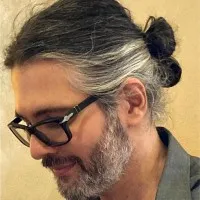
Giovanni Merlino is an associate professor in computer science engineering at the University of Messina, Italy. His research focuses on mobile and distributed systems with particular emphasis on IoT and Cyber-Physical Systems modeled as software-defined infrastructure, especially in terms of hybrid IT/OT convergence and decentralization protocols. He played a key role in designing the Stack4Things middleware. He is co-founder of SmartMe.io, an academic spino" and startup company, and co-inventor and holder of a patent. He has authored over 100 peer-reviewed scientific publications.
LinkedIn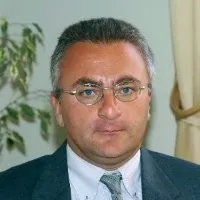
Antonio Puliafito is a full professor of computer engineering at the University of Messina, Italy. His interests include distributed systems, networking, IoT and Cloud computing. He participated in several European projects such as Reservoir, Vision, CloudWave, Beacon and SLICES. He has contributed to the development of the Stack4Things middleware. He is the founder of SmartMe.io, a startup focused on hw and sw solutions to design and manage Cyber Physical Systems. He is author and co-author of more than 500 scientific papers.
LinkedInIEEE SWC 2026 Colocated Conferences
IEEE SWC 2026
IEEE Digital Twin 2026
IEEE METAVERSE 2026
IEEE ScalCom 2026
IEEE UIC 2026
IEEE ATC 2026
Sponsors